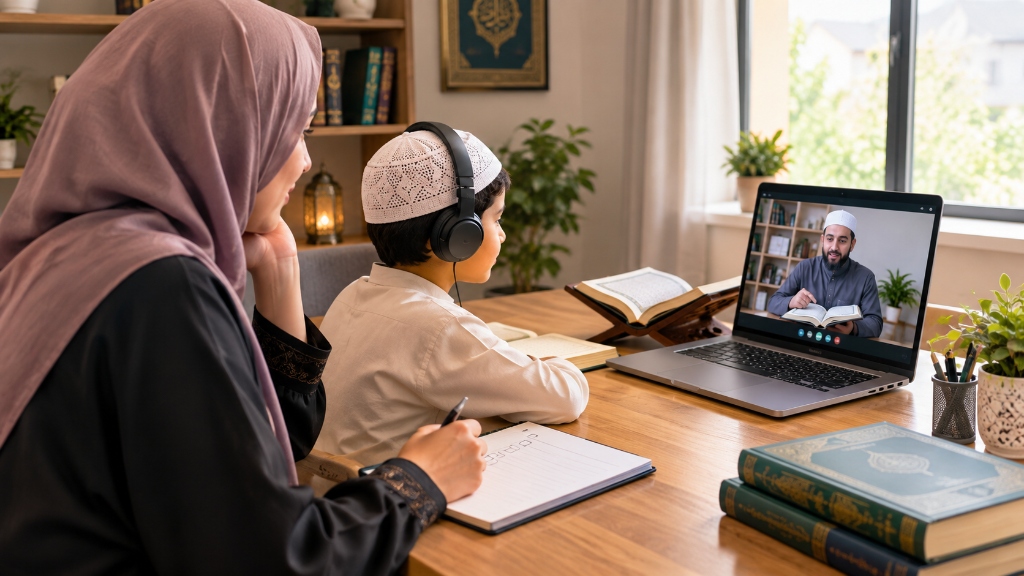
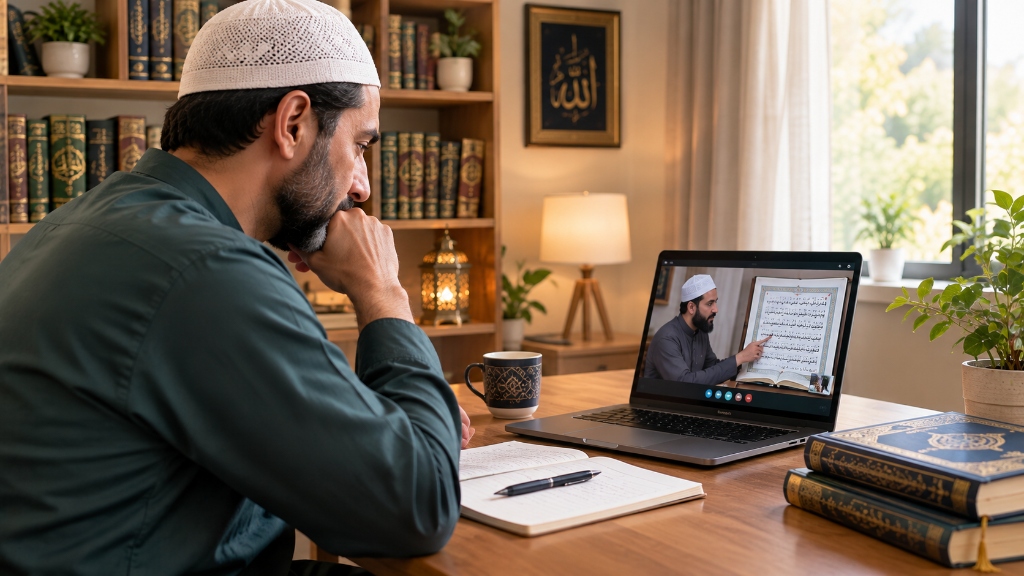
How to Help Your Child Practice Quran at Home

Bright Quran Editorial Team
Authentic Islamic & Quranic Education
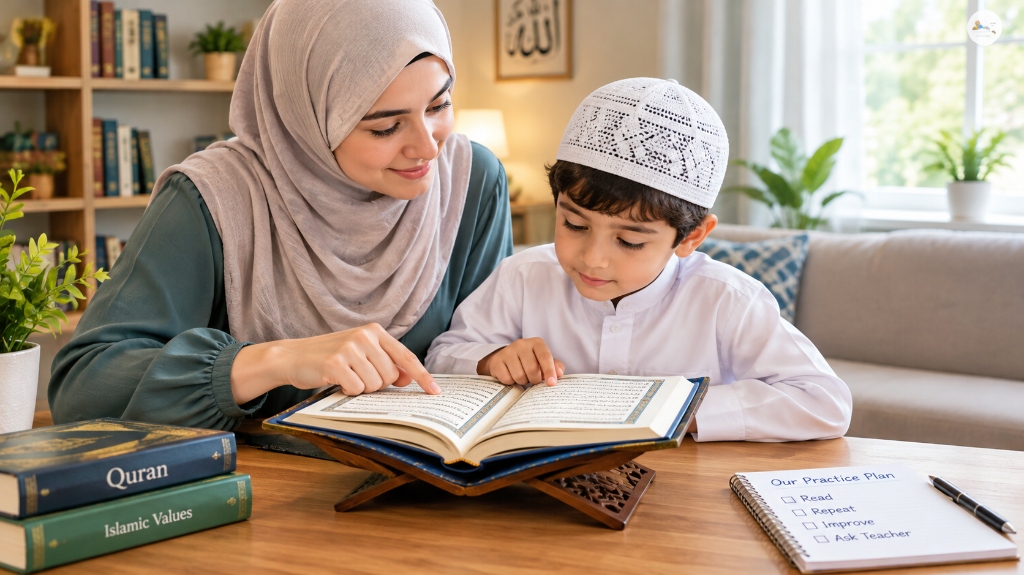
Many children read well during their Quran lesson, then struggle to repeat the same material a few days later. The teacher guides them in class, but at home parents are often unsure what to revise, how much to encourage, or whether to correct mistakes.
This is a common gap when children are learning to read the Quran. It does not mean your child is falling behind. Short revision between lessons gives children another chance to see familiar letters and reading patterns before the next class.
You do not need to become a Quran teacher to help. Your role is to create a calm routine, help your child review what they already know, and pass useful observations to the teacher. Correction and new material stay with the teacher.
The Quick Answer: Start With a Short, Simple Routine
Try a session of about 5–10 minutes on days when your child has no lesson. Treat this as a flexible starting point, not a rule. Adjust it to your child's age, current level, energy, and the teacher's advice.
- A simple session follows four steps:
- Review material the teacher has already covered.
- Listen while your child reads aloud.
- Repeat one difficult section, calmly.
- Note one recurring difficulty or question for the teacher.
You do not need to cover a full page. A short session is easier to repeat than a long one.
A Home-Practice Routine, Step by Step
1. Review only what the teacher has covered
Ask your child what they learned in the last lesson, or check the lesson notes if the teacher shares them. Practice that material, not the next page because it looks easy.New material works best with the teacher, who can hear the first attempts and correct them. If you are unsure what to revise, ask the teacher for a clear recommendation.
2. Let your child read while you listen
Sit nearby and give your child time to read aloud. You do not need to read Arabic to do this. Listening, showing interest, and noticing patterns is enough.- Watch for a few things:
- Does your child hesitate at the same letters or words?
- Can they carry on after a mistake?
- Is familiar material more comfortable than it was a few weeks ago?
- Do they seem confident, tired, or frustrated?
These are observations, not an assessment. They help you describe to the teacher what practice looks like at home.
3. Repeat one difficult section
If your child stumbles on a familiar word or line, invite them to try again. "Let's try that once more" is enough. Then move on. If the difficulty continues, make a note instead of working through it yourself.The aim is gentle repetition, not a test.
4. Record one note for the teacher
Keep a small notebook or a note on your phone. You do not need to record every mistake. One useful observation per session is plenty, for example:Share your notes before or during the next lesson. They show the teacher what happens between classes and what to focus on.
An example session: A child learning connected letters in Qaida might show you last lesson's page, read three or four familiar examples aloud, try one example again after hesitating, and finish. The parent writes one line of notes. The whole thing takes a few minutes.
Adjust Practice to Your Child's Learning Stage
Children need different support as they move from letters to reading the Quran itself.
Stage 1: Learning letters and starting Qaida
A Qaida is a foundation book that teaches Arabic letters, joining, and basic reading rules. Noorani Qaida and Madani Qaida are two commonly used versions.Keep practice to a few letters or examples the teacher has introduced, and avoid adding more at once. If you are unsure which suits your child, ask the teacher, and see how Noorani and Madani Qaida classes work. The free Noorani Qaida Learning & Practice Pack also offers beginner practice and revision exercises.
Stage 2: Practicing connected letters and vowel marks
Here your child learns how letters join and how short vowel marks (called harakat) change the sound. Ask them to read examples from the current lesson, and listen for repeated hesitation on the same pattern. If one pattern keeps causing trouble, ask the teacher to show you how to practice it at home.Stage 3: Beginning direct Quran reading (Nazra)
Nazra means reading directly from the Quran, not only from a foundation book. Real Quranic text includes a wider variety of letter combinations, so reading may feel slower at first. That is not unusual.Let your child review familiar lines and follow the teacher's guidance on what to read next. The Quran Reading Practice Pack offers extra practice material, and you can learn more about Quran reading classes if your child is ready for structured support at this stage.
Stage 4: Reading accurately but slowly
Slow and accurate reading is a reasonable place to be. Avoid pushing for speed. Focus on comfortable, accurate reading, and ask the teacher when harder material is appropriate.What Should Parents Do When a Child Makes Mistakes?
Many parents want to help but worry about teaching something incorrectly. It helps to separate two things:
- Supportive listening means encouraging your child, noticing recurring difficulties, and sharing them with the teacher.
- Teaching pronunciation and Tajweed (the rules for reciting the Quran correctly) requires training. If you guess at a rule, you may confuse your child, especially if your explanation differs from the teacher's.
- In practice:
- If the slip is obvious and you are confident of the correct reading, you can gently invite another try.
- If it involves a sound or rule you do not understand, note it and ask the teacher.
- You do not need to stop at every mistake. Constant interruption can break your child's concentration and make reading aloud feel stressful.
- If the same point keeps coming up, ask the teacher how to revise it at home.
You are not expected to catch every error. The teacher is the one trained to hear them.
Common Mistakes to Avoid
- Long sessions. They are harder to sustain after school and other activities. Start small and adjust.
- Correcting every hesitation. See the section above for what to do instead.
- Comparing siblings or other children. Starting points and pace differ, and comparison adds pressure.
- Rushing through pages. Finishing a page does not mean it has been learned.
- Practicing material not yet covered. Your child may repeat errors that nobody is there to correct.
- Measuring progress only by pages completed. Also notice less hesitation, easier letter recognition, and more willingness to read aloud.
How to Make Practice a Habit
The easiest routine is the one that fits the day your family already has.
- Use a cue. Practice after a snack or after dinner, so it attaches to something that already happens.
- Pick a workable time. Some children do better in the morning, others in the early evening. Avoid times when your child is already exhausted.
- Keep it short enough to finish. Small sessions are easier to repeat.
- Allow flexibility. If a day falls apart, return to the routine the next day without guilt.
- Notice effort. Acknowledge patience, willingness to try again, and careful reading, not only finished pages.
Families with several children or irregular work schedules may need a different routine for each child. That is fine.
How to Work With Your Child's Quran Teacher
- Home practice works best when the teacher and parent know what the child is working on. Useful questions include:
- What should we revise at home between lessons?
- Which mistakes matter most right now, and which can wait?
- Is there anything my child should not practice on their own yet?
- How can I tell whether my child is ready for the next stage?
You can also ask the teacher to demonstrate a short revision activity during a lesson, so you know how to repeat it at home. If you are not receiving progress updates, ask how and when the teacher can share them.
A Weekly Practice Checklist
Copy this into a notebook or print it. It is an organizational aid, not a guarantee of faster learning.
This week: [ ] I checked what my child covered in the last lesson. [ ] We practiced on a realistic number of days. [ ] Each session used familiar material. [ ] I listened without stopping at every mistake. [ ] I noted one recurring difficulty or question. [ ] I shared my notes with the teacher. [ ] I encouraged my child's effort.
Final Thoughts
Helping your child practice Quran at home does not require a teacher's training or a complicated timetable. Start with material your child already knows, keep sessions short, listen patiently, and stay in touch with the teacher.
If your child would benefit from structured, one-to-one guidance, you can explore Bright Quran Online's Quran classes for kids. The academy offers live 30-minute lessons and a free first class with no obligation, which gives families a chance to discuss their child's current learning needs.
Frequently Asked Questions
Detailed answers based on authentic Islamic scholarly references
Ready to Deepen Your Quranic Recitation?
Join our live 1-on-1 Quran and Tajweed classes designed for kids and adults at your preferred timings.
Book Free Trial ClassRecommended Reading
Continue exploring authentic guides and insights